An educational profile of the polar bear and of what its claws mean in natural history collections. It covers the species and the object in general; it does not state that the museum holds any specific piece.
Physical Characteristics of the Polar Bear
The polar bear (Ursus maritimus) is the largest land carnivore. Its fur looks white, but each hair is translucent and hollow, and the skin beneath is black, which helps absorb the warmth of the sun. A thick layer of fat and dense fur insulate it against extreme cold. Adult males are much larger than females, and big individuals can weigh more than 400 kilograms.
The claws are short, curved, strong and non-retractable, and dark in colour. They are not for climbing; they grip slippery ice, hold prey and drag the body across the surface. The front paws are broad and the soles are covered in tiny bumps called papillae that improve traction and spread the animal's weight on thin ice.
Habitat and Geographic Distribution
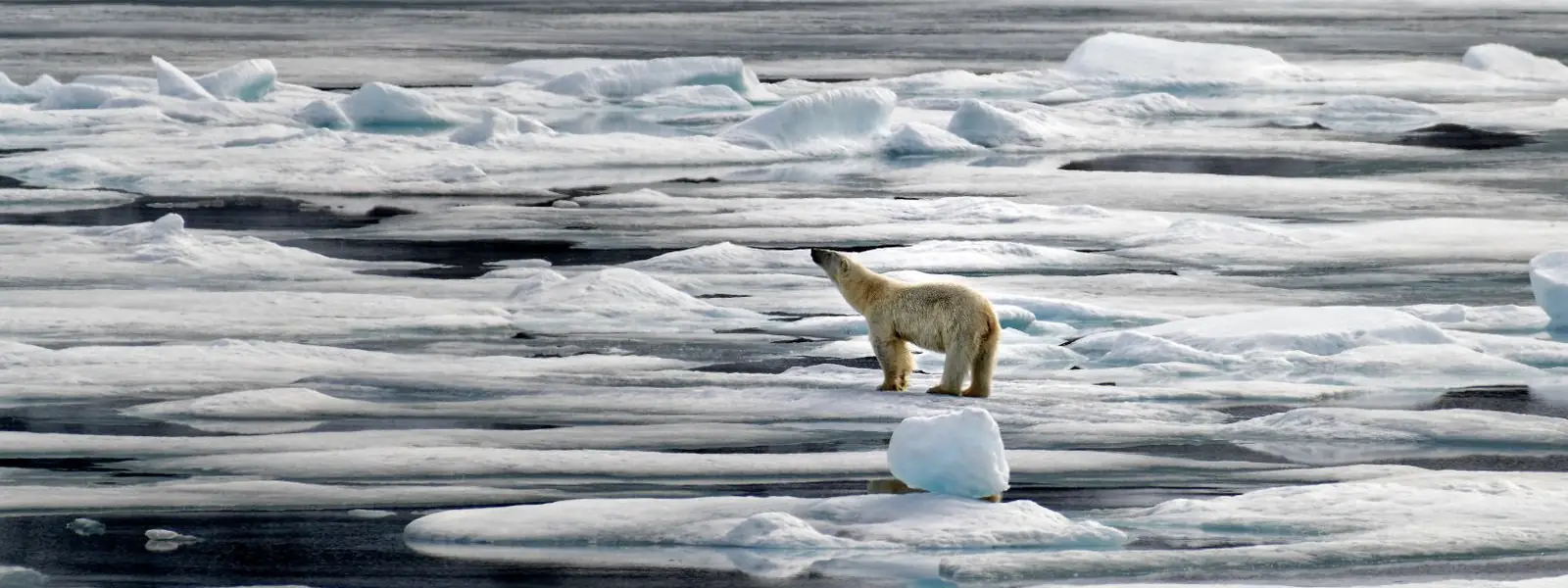
The polar bear lives in the Arctic around the pole, always tied to sea ice. Its range is shared by five countries: the United States (Alaska), Canada, Greenland (Denmark), Norway (Svalbard) and Russia. Specialists recognise 19 subpopulations, in very different situations.
Polar bears do not live naturally in Antarctica, in continental Europe or in Spain. Anyone seeing one alive in Spain would be at a zoo.
Behavior and Diet
It is a marine predator: its main prey are seals, above all the ringed seal, which it stalks beside breathing holes and at the edge of the ice. It lives mostly alone. Pregnant females dig a snow den to give birth, usually to one or two cubs, and stay there for much of the winter.
Where the ice disappears in summer, bears spend weeks on land with very little food and live off fat reserves built up earlier. The longer that period lasts, the harder it is for them to keep their condition.
Conservation Status and Threats
The IUCN Red List classifies the polar bear as Vulnerable. Its 2015 assessment put the world population at around 26,000 animals, within a range of 22,000 to 31,000. The main threat is the loss of sea ice due to climate change, along with pollution and human activity in the Arctic.
Since 1973 there has been an agreement among the five range countries to conserve the species. International trade in its parts is regulated by CITES, which lists the polar bear in Appendix II.
The Polar Bear in Culture and Art
For many Arctic peoples the polar bear holds a central place in oral tradition, carving and hunting rites. Its image also appears in contemporary art from northern Canada and Greenland. The use of parts of the animal by Indigenous communities is regulated in each country and is a separate matter from sport hunting or the souvenir trade.
The Polar Bear Claw as a Study Object
For zoology, a claw says something about the animal's way of life: its curve, thickness and wear show how it grips a surface and how much it has moved across it. In museums, claws are usually kept in skeletal collections or form part of a mounted specimen.
Because the species is protected, holding or trading polar bear items requires documents showing their origin. A serious museum records where each piece came from and when it entered the collection; when visiting any museum, it is good practice to look for that information next to the exhibit.
Frequently asked questions
Why do polar bears have such large claws?
They use them to grip ice, hold heavy prey such as seals and pull their bodies across slippery surfaces. The claws are robust, curved and non-retractable.
Is the polar bear endangered?
The IUCN lists it as Vulnerable. It is not in the highest threat category, but its future depends on the survival of sea ice.
Where can polar bears be seen in their natural habitat?
Only in the Arctic: Alaska, Canada, Greenland, Svalbard and Russia. Visits should be made with authorised operators and in line with local rules.
Worth keeping in mind
This profile does not describe a specific piece in the museum. Population figures come from the 2015 IUCN assessment and may have changed.